Lived Experience: real voices, real change
13 Oct 2026by
 Lauren O'Connor
Following on from World Mental Health Day 2026, this week we are continuing to share some of our staff experience with mental health recovery and how they use their experience in their role at the college.
Next we are sharing a Q&A with our colleague Charlotte.
Charlotte is our Curriculum Development Lead at The Recovery College where she oversees the design and development of our curriculum (courses).
What does recovery mean to you personally, and has that definition changed over time?
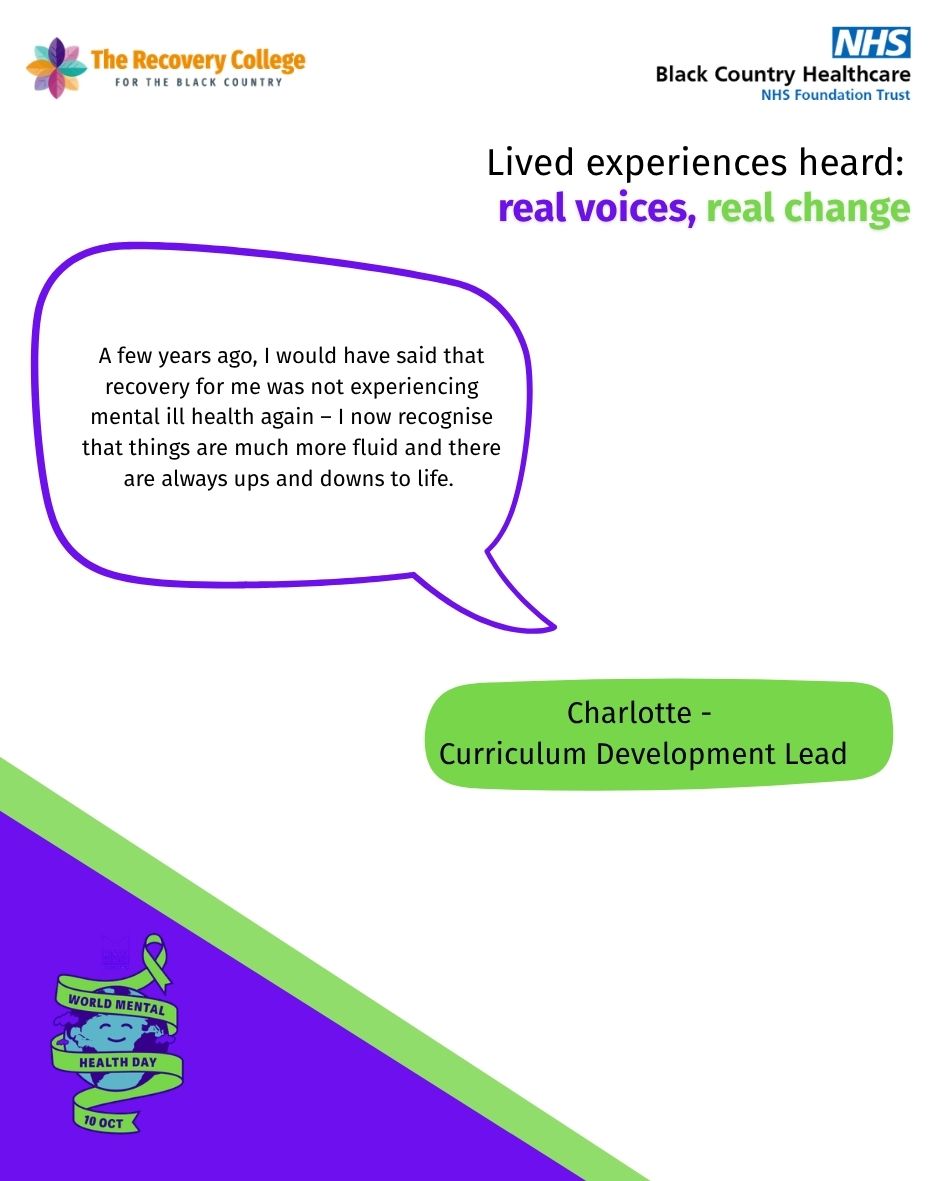
For me recovery means being much better able to notice and recognise when I am struggling and knowing/ being able to put into practice the things that help me cope and start to feel better. A few years ago, I would have said that recovery for me was not experiencing mental ill health again – I now recognise that things are much more fluid and there are always ups and downs to life.
What people, services, activities, or strategies have been most important in supporting your recovery?
Family and friends definitely – being able to talk about how I feel, but also often being able to spend time with loved ones, having a laugh and having fun together. Getting outside, connecting more with nature is always a great way of lifting my mood and ‘resetting’ a bit.
How has your lived experience influenced your decision to work in mental health or related services?
My own lived experience and seeing some of the struggles people close to me have encountered – definitely influenced my decision to work in mental health. I like to help and support others. It has felt very empowering for me to learn more about mental health, understand why my brain sometimes behaves the way it does, and to be much better able to notice when am struggling and know the different things that can help. I care about supporting others to be able to also do that learning and feel more empowered to support themselves.
What do you wish people understood better about mental health, recovery, or lived experience?
I wish people better understood the importance of reaching out and talking about how you are feeling, rather than keeping it all bottled up – whether to someone you know or to a helpline/ GP or other service.
-------------------------------------------------------------------------------------------------------------------------------------------------------------------------
If you need urgent support for your mental health, please contact NHS 111 Option 2.
There are also other helplines you can contact
CALM - Campaign Against Living Miserably Call 0800 58 58 58. The helpline is open 5pm - midnight every day.
Samaritans - 116 123 (24 hr helpline)
https://www.therecoverycollege.co.uk/the-rc-hub/crisis-support