Black History Month 2026
14 Oct 2026by
 Lauren O'Connor
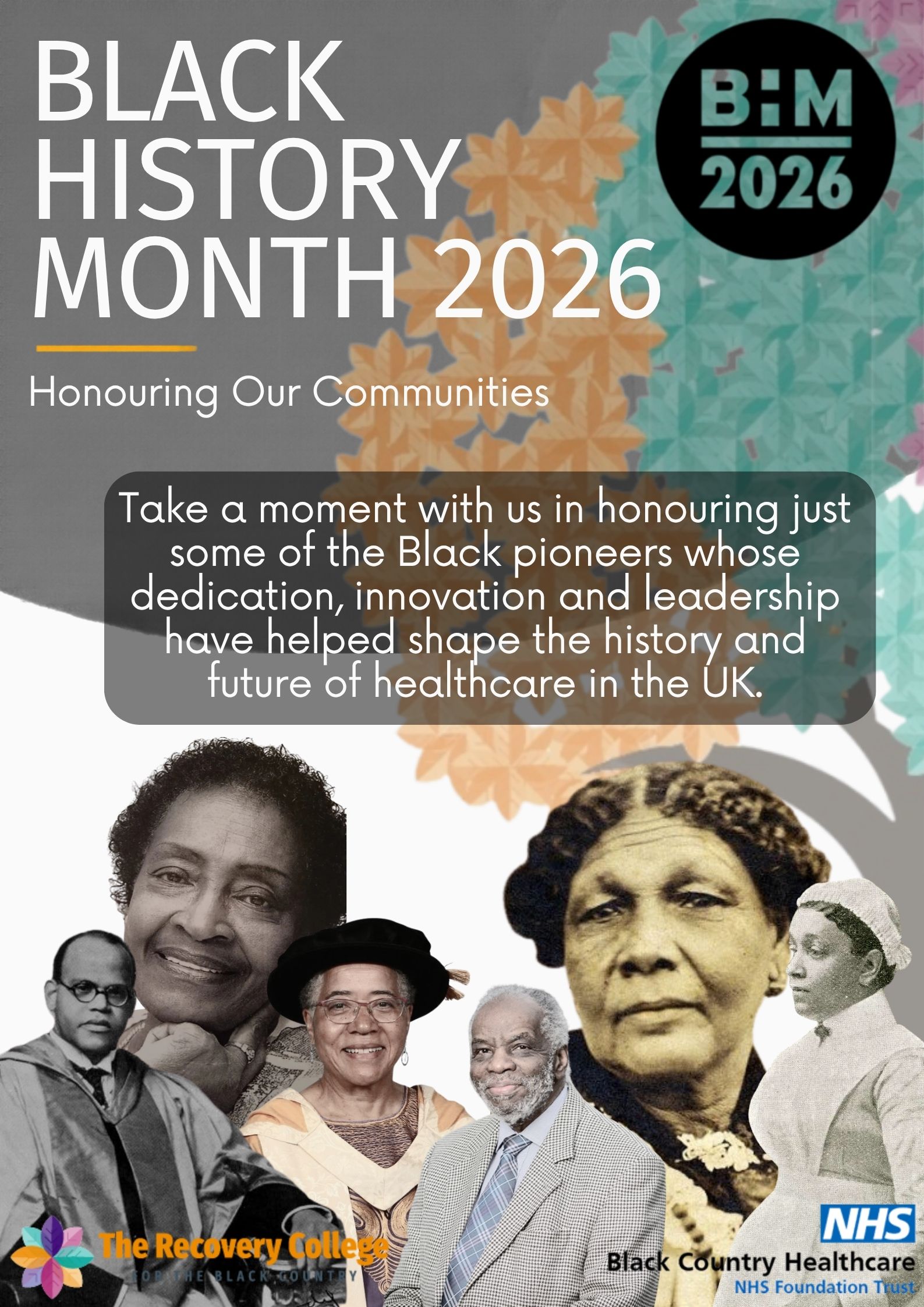
This Black History Month the theme is Honouring our Communities Take a moment with us in honouring just some of the Black pioneers whose dedication, innovation and leadership have helped shape the history and future of healthcare in the UK.
In this article we are sharing the stories of three Black pioneers, Mary Seacole, Dr Harold Moody and Professor Dame Elizabeth Anionwu.
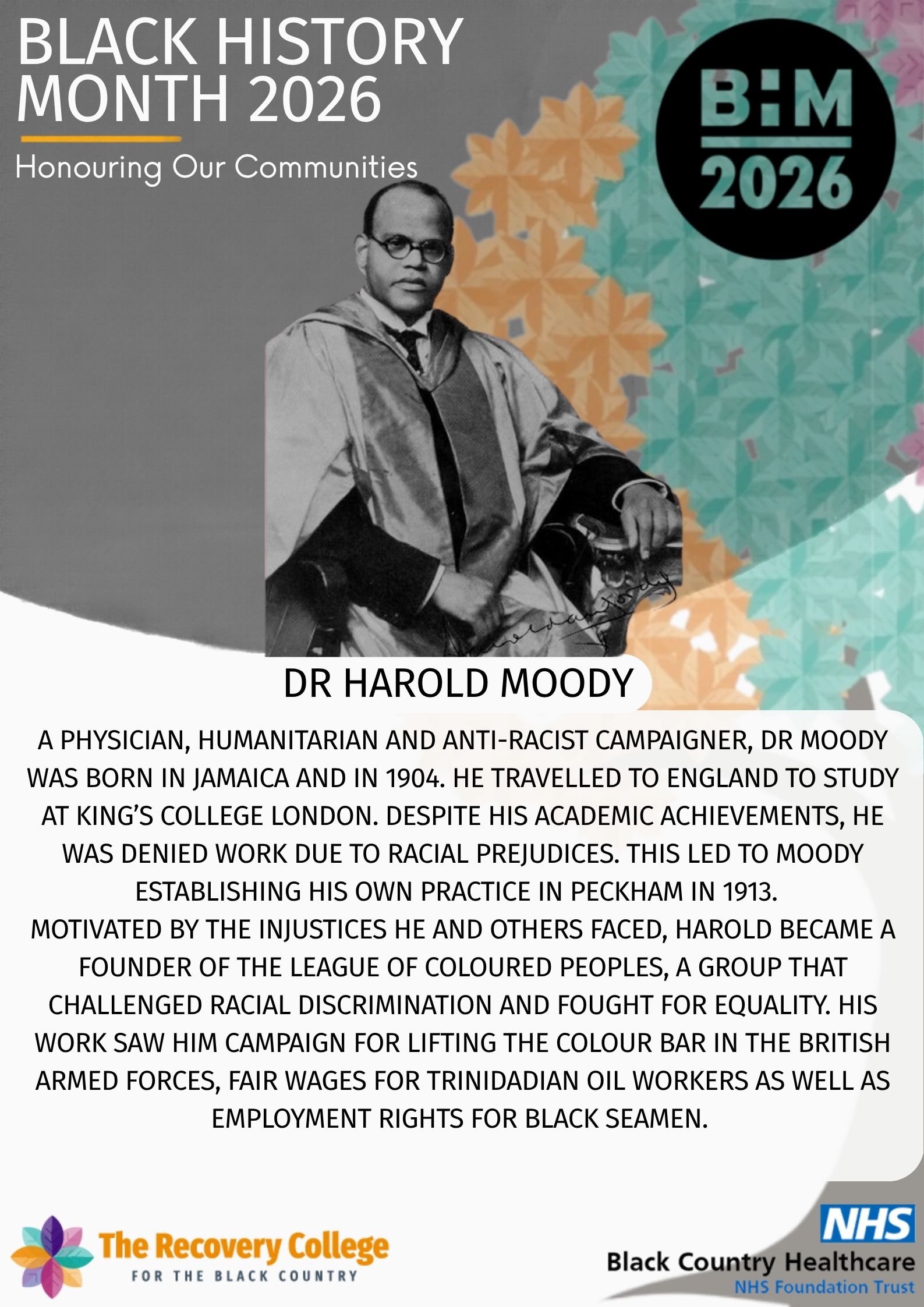
Dr Harold Moody
A physician, humanitarian and anti-racist campaigner, dr Moody was born in Jamaica and in 1904. he travelled to England to study at King’s College London. Despite his academic achievements, he was denied work due to racial prejudices. This led to Moody establishing his own practice in Peckham in 1913.
Motivated by the injustices he and others faced, Harold became a founder of the League of Coloured Peoples, a group that challenged racial discrimination and fought for equality. His work saw him campaign for lifting the colour bar in the British armed forces, fair wages for Trinidadian oil workers as well as employment rights for black seamen.
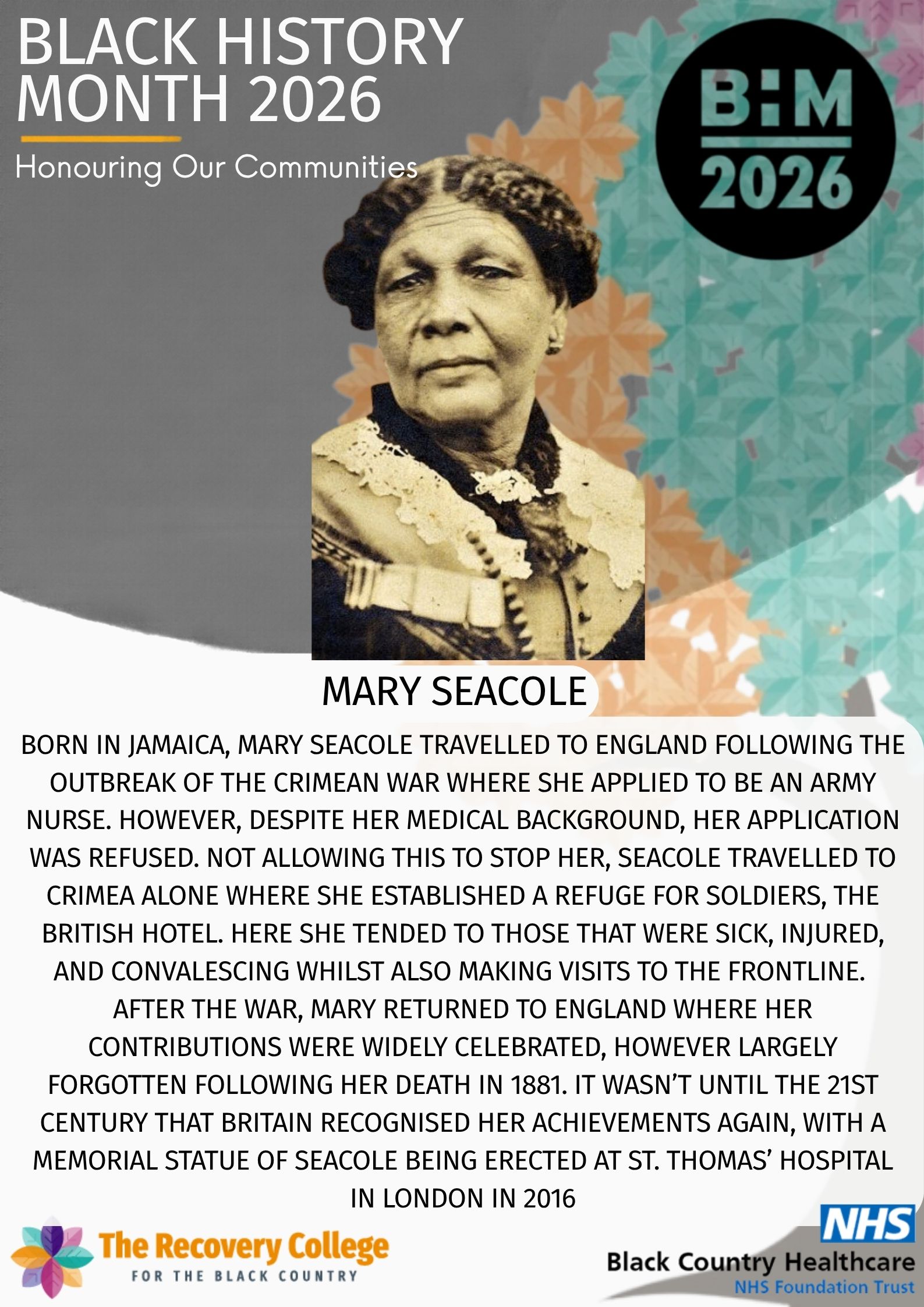
Mary Seacole
Born in Jamaica, Mary Seacole travelled to England following the outbreak of the Crimean War where she applied to be an army nurse. However, despite her medical background, her application was refused. Not allowing this to stop her, Seacole travelled to Crimea alone where she established a refuge for soldiers, the British Hotel. Here she tended to those that were sick, injured, and convalescing whilst also making visits to the frontline.
After the war, Mary returned to England where her contributions were widely celebrated, however largely forgotten following her death in 1881. It wasn’t until the 21st century that Britain recognised her achievements again, with a memorial statue of Seacole being erected at St. Thomas’ Hospital in London in 2016
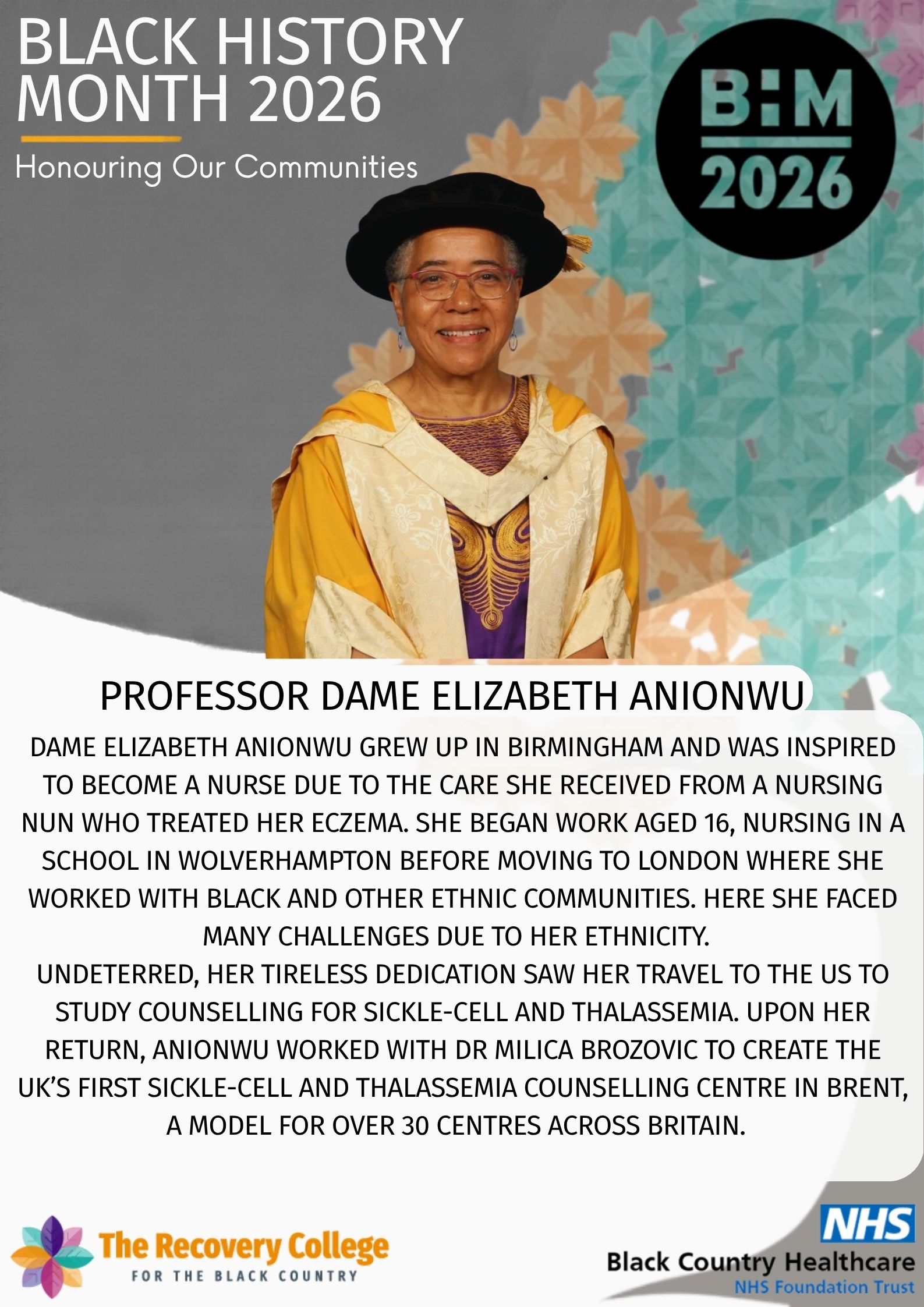
Professor Dame Elizabeth Anionwu
Grew up in Birmingham and was inspired to become a nurse due to the care she received from a nursing nun who treated her eczema. She began work aged 16, nursing in a school in Wolverhampton before moving to London where she worked with black and other ethnic communities. Here she faced many challenges due to her ethnicity.
Undeterred, her tireless dedication saw her travel to the US to study counselling for sickle-cell and thalassemia. Upon her return, Anionwu worked with Dr Milica Brozovic to create the UK’s first sickle-cell and thalassemia counselling centre in Brent, a model for over 30 centres across Britain.
Come back next week for our next blog post honouring 3 more Black pioneers who have helped shaped history and future of healthcare in the UK!